
Plants
Purple Snakeweed
27 July 2023
Plant categories
Ornamental
Biodiversity-attracting
Also grown as
Perimeter planting
Scientific name: Stachytarpheta jamaicensis
Other common names: Brazilian Tea, Rooter Comb, Verbena Cimarrona, Gervao, Blue Porter Weed
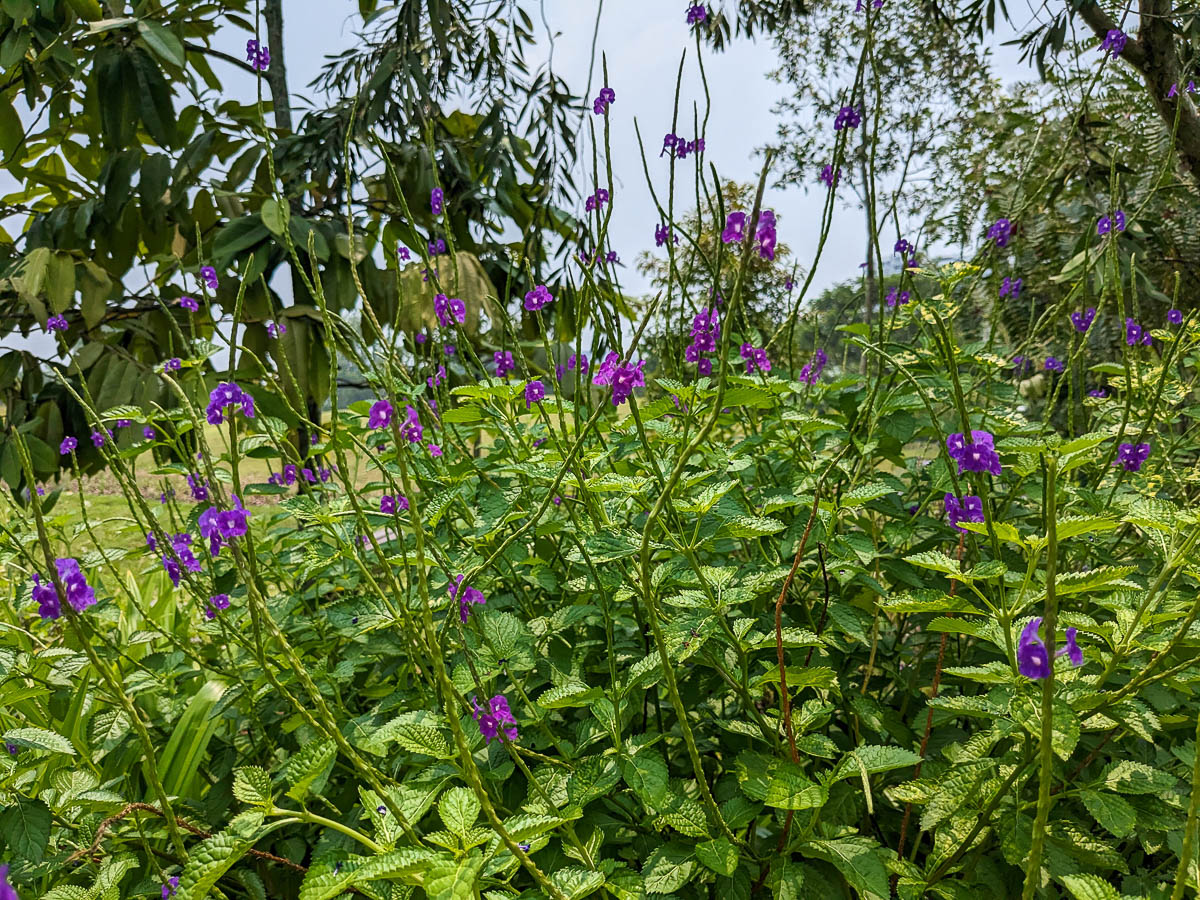
Purple snakeweed plants are hard hardy free-flowering shrubs that are commonly seen in rewilding areas, nature parks, in roadside gardens, and biodiversity-attracting gardens. The flowers are highly attractive to bees, butterflies, and birds.
A perennial shrub, purple snakeweed plants are useful as biodiversity-attracting plants and perimeter plants to add a pop of colour to any garden.
Sun and soil needs:
This plant thrives in 4-8 hours of direct or indirect sunlight. Plants do best in pots with loamy soil at least 30cm deep, or in true ground.
Growing:
Purple snakeweed plants are rapid growers and generally does not need fertilizing. The shrub can rapidly grow up to 1m in height and will need to be hard pruned regularly. Regular pruning to promote airflow will keep the plant healthy and neat.
Propagation:
Purple snakeweed plants can be grown from seed or stem cuttings rooted in water or soil.
Common problems & solutions:
This plant is relatively resistant to pests and disease if kept healthy.
If your plant has few to no flowers, you can fertilise the plant with fertilisers high in phosphorus and potassium.
This plant can be considered weedy if left unmanaged. Regularly prune the plant to maintain its size and remove accidental seedlings if found.
Aphids, mealy bugs and whiteflies often infest the plant if it has underlying problems like repeated wilting from heat stress. Mechanical pest control methods like pruning tthe infested parts are the best methods for managing these pests in the short term, but resolving the underlying problem will prevent them in the long term.