
Plant problems
Plant Pests
21 September 2023
What's wrong
Pest
Learn about the common plant pests you might find in your garden.
_plantscienceandhealth_nparks.jpg)
Plant pests are animals that cause damage to crops or ornamental plants, and can cause frustration for gardeners. However, they are still a part of our natural environment, and care should be taken to manage their impact while keeping the garden a safe place for people and biodiversity. Using integrated pest management techniques with solutions tailored for specific pests is the best way to solve problems over the long term.
The first step in pest management is to know what plant pest you are up against.
Some common garden pests you might see are:
Sucking pests
Aphids
victorialim.jpg)
Aphids are small, sucking pests that are usually found in clusters along stems and leaf veins on both the top and undersides of leaves.
Scale insects
victorialim.jpg)
Scale insects can have soft or hard shells, but they all look like scales clustered around stems and leaf veins on both the top and undersides of leaves.
Spider Mites
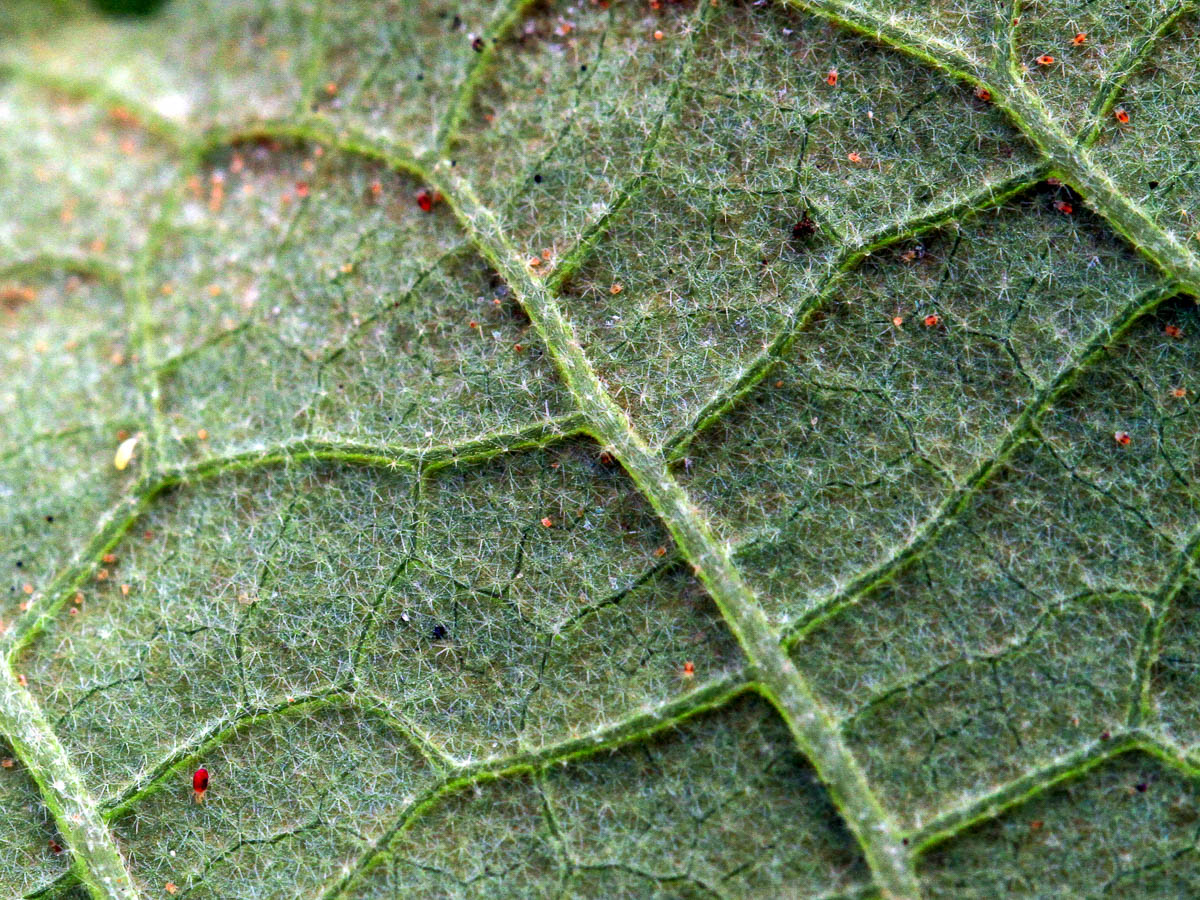
Spider mites are very tiny, red sucking pests that are usually found on the leaves and stems of indoor plants or plants that have been affected by wilting by heat stress. They can barely been seen by the naked eye, and they leave distinctive webbing on affected plants.
Mealy Bugs
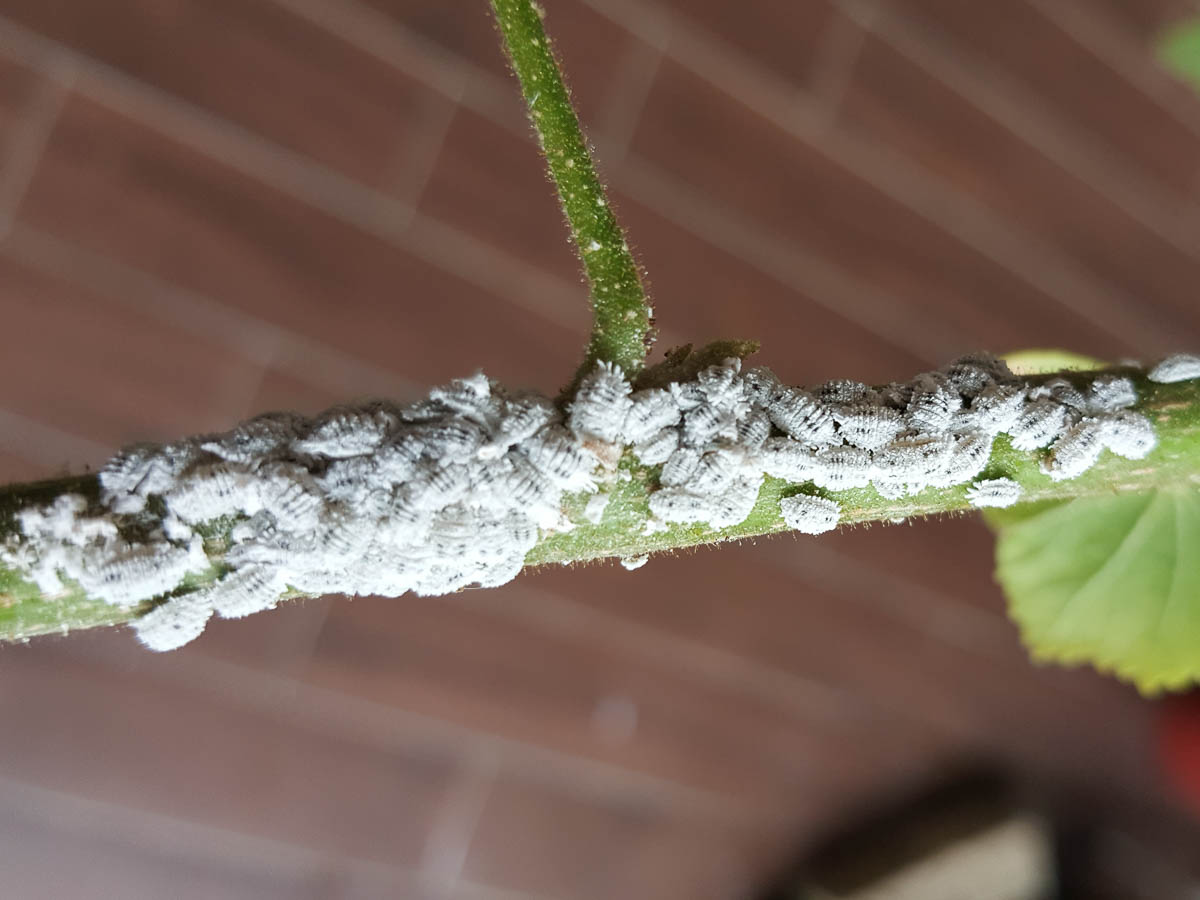
Mealy bugs are soft sucking insects that have a cottony white covering, and can be found in clusters around stems and leaf veins on both the top and undersides of leaves.
Whiteflies
victorialim.jpg)
Whiteflies are tiny flying pests that are white or silvery, with larvae and eggs that resemble clusters of small scales. Both the adult and larvae suck sap on the underside of leaves.
Large chewing pests
Caterpillars
.jpg)
Caterpillars are the larvae of butterflies and moths, and they rapidly eat a variety of edible and ornamental plants. Leaves can be completely eaten, or have only the veins left behind. They can generally be found near the leaves they have eaten, hidden in rolled leaves or at the base of leaves.
Grasshoppers, Crickets and Katydids
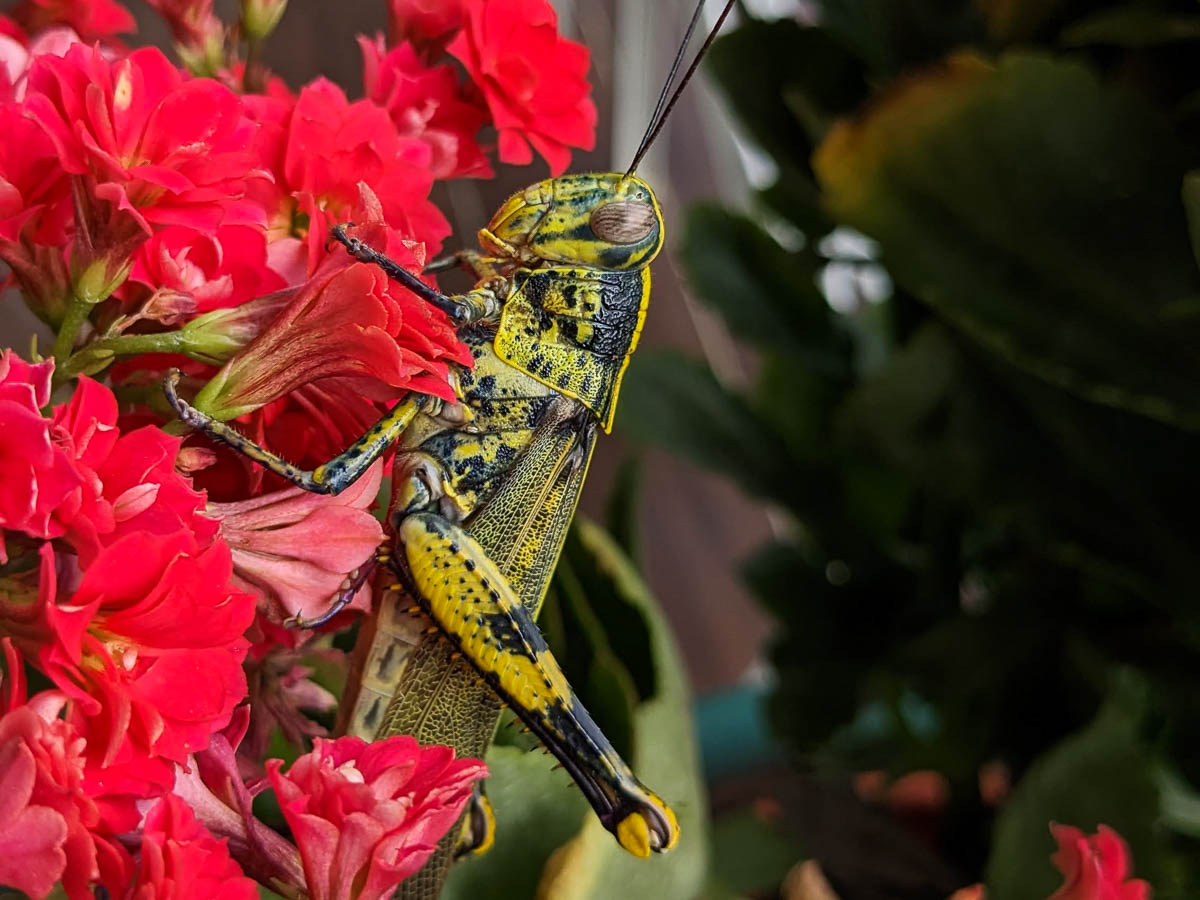
Grasshoppers, crickets and katydids will rapidly eat leaves and then fly or hop away! You can usually catch them in the act in the morning or the evening. Leaves chewed by these insects will have waxy bite marks with smooth margins.
Snails and slugs
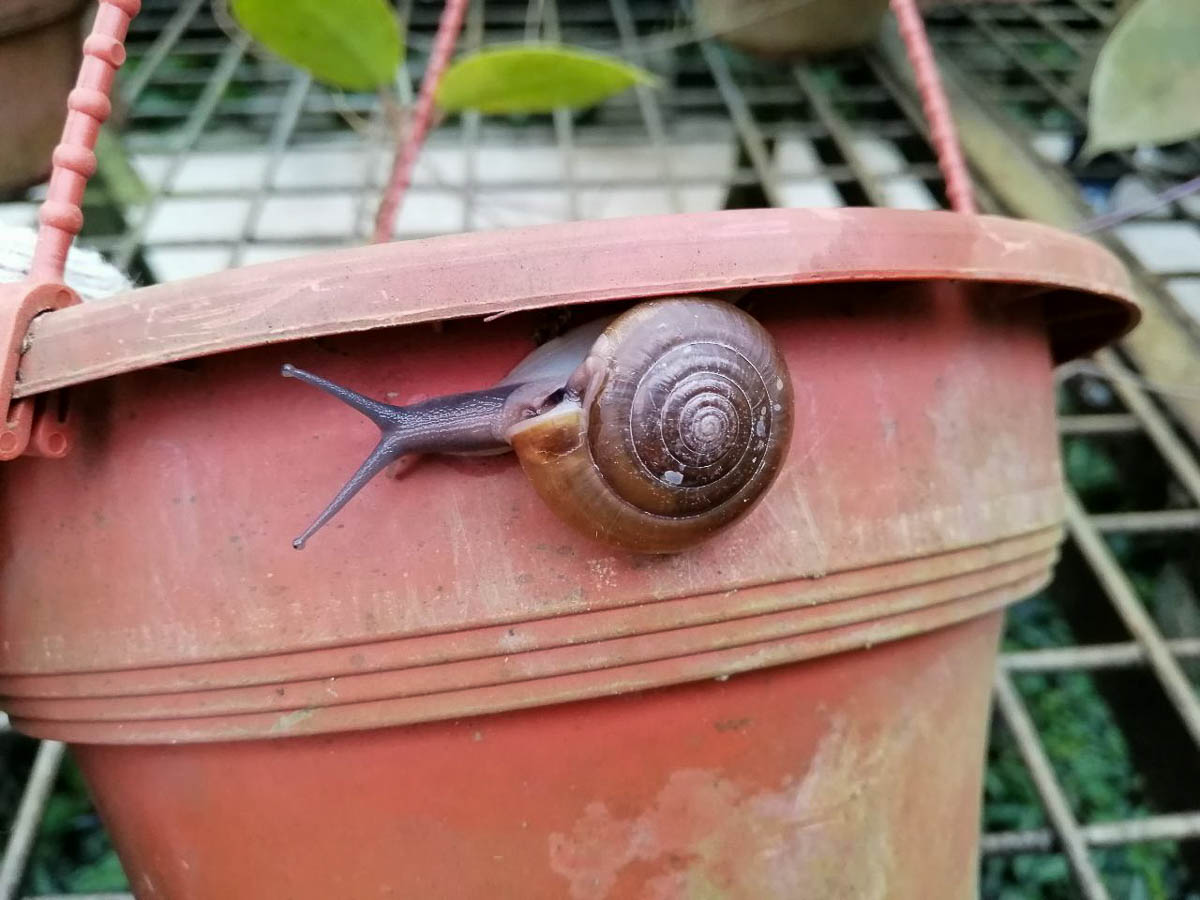
Snails and slugs are nocturnal pests that will use their rough tongues to rasp leaves and young shoots of plants, and are capable of eating whole seedlings overnight. Leaves attacked by snails and slugs will have patchy holes, with the leaves closest to the ground eaten first. They are usually the most active during the rainy season.
"Burrowing" pests
Leaf miners
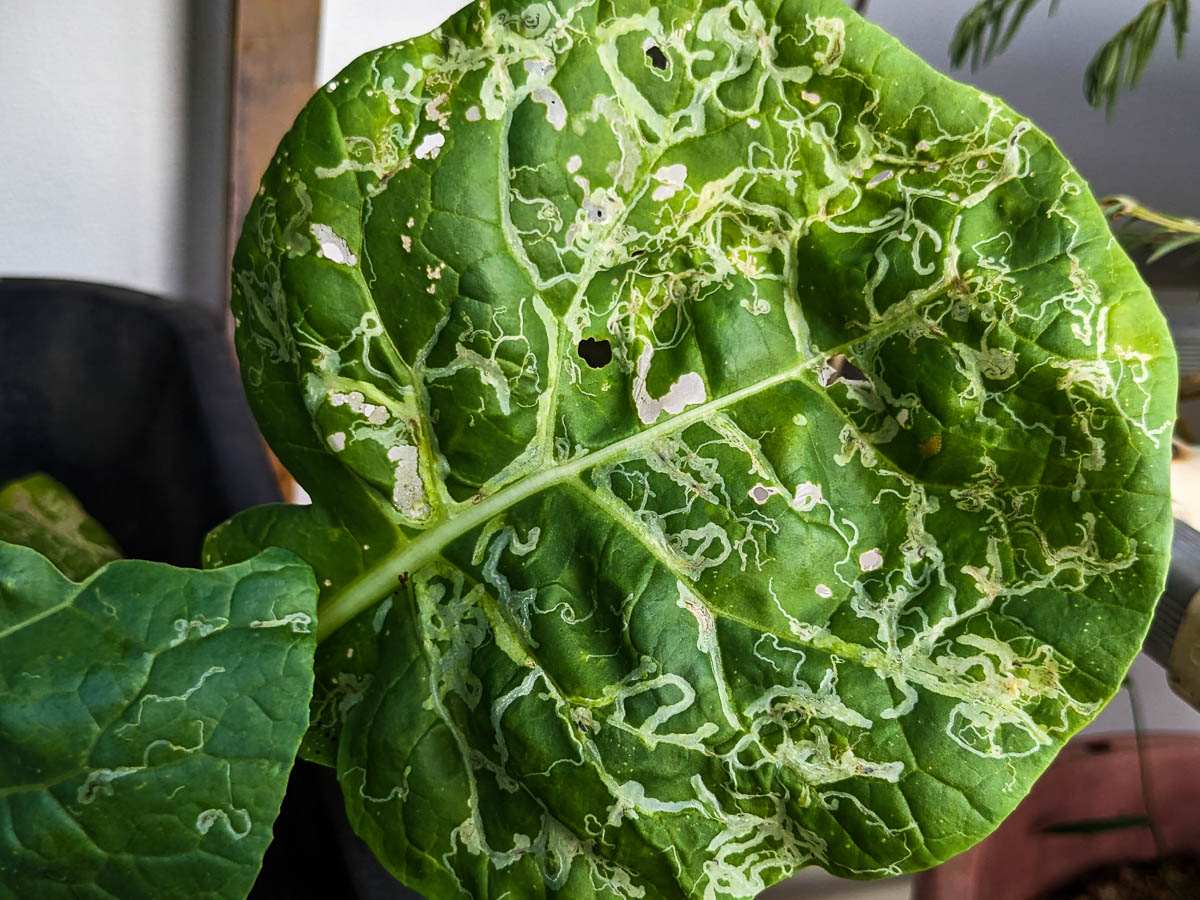
Leaf miners are the larvae of small grey flies. They eat their way inside leaves, leaving long trails in their wake.
Oriental Fruit flies
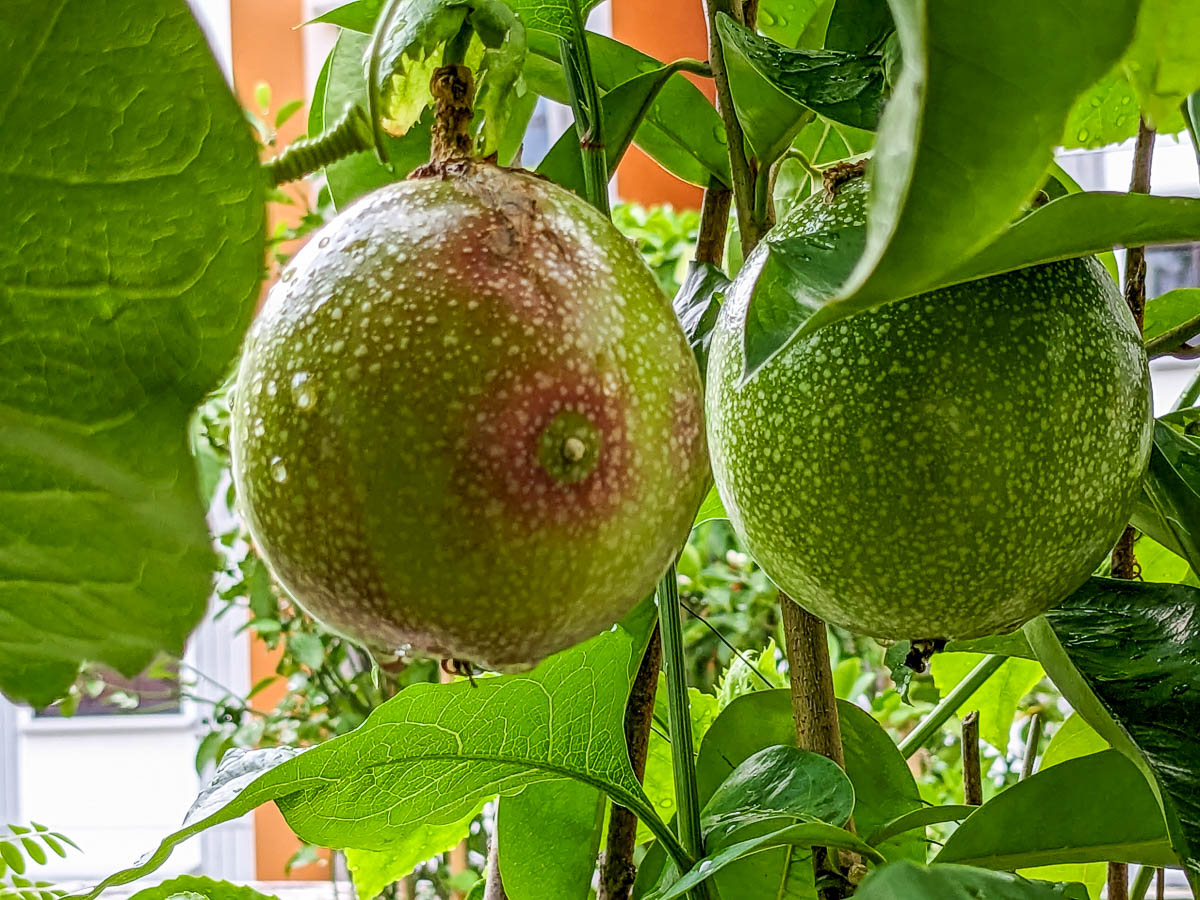
Oriental fruit flies are rarely seen by gardeners, and sometimes get mistaken as bees or wasps because they are also black and yellow! However, they will leave tell-tale swellings and distortions when they lay their eggs inside fruit. Otherwise, you may find the odd fruit fly larvae when you open infected fruit!
Large animals
Birds
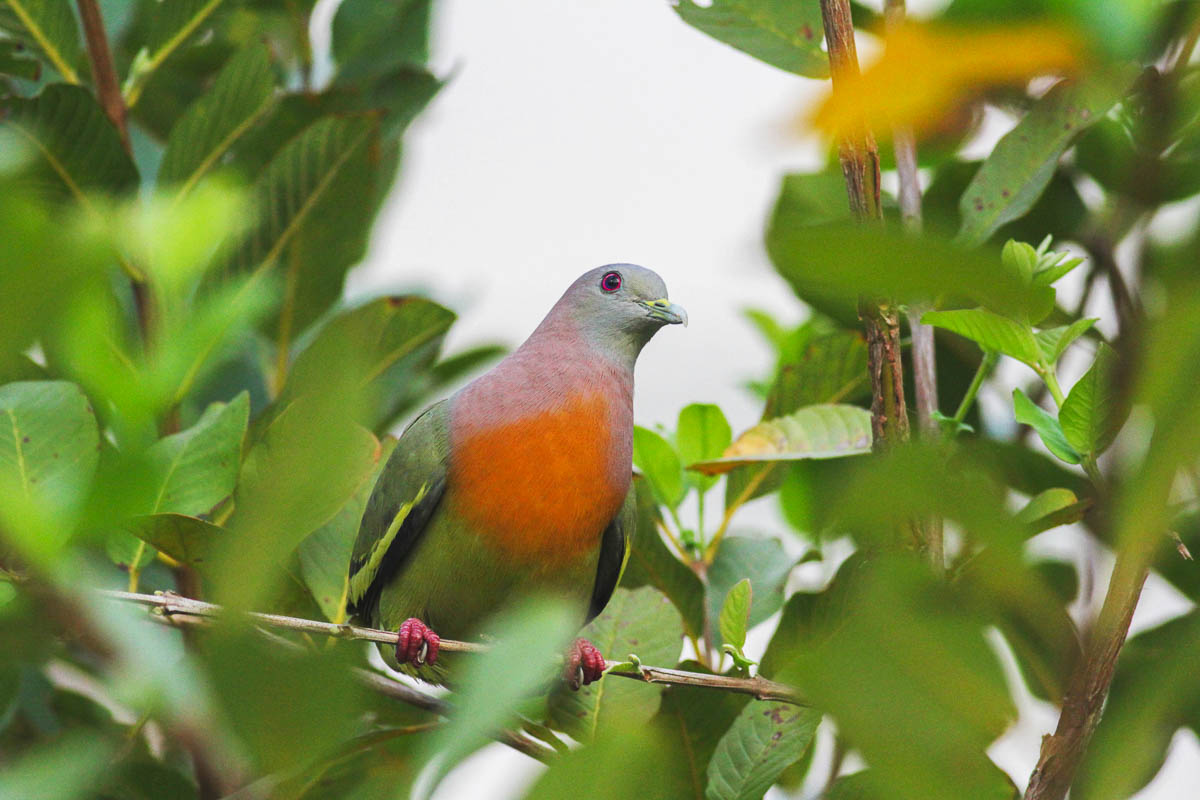
Some birds may eat fruits, grains, and seedlings from your garden, and can do substantial damage if they are in a large flock. Birds are usually seen feeding in the morning. Use netting to prevent them from eating your crops.
Rodents
victorialim.jpg)
Most rodents will emerge at night, with the exception of squirrels, which forage during the day. Netting up ripening fruit and germinating vulnerable seedlings in protected areas are the most straightforward method to manage these animals. Reducing the availability of their food sources, like exposed garbage or large fruit peels in compost, will also discourage them from visiting your garden.